
Numbers
Invoice number: unique, sequential, simple.
What a good invoice number looks like: sequential, unique, with or without the year. Examples, the rules in CH, DE and AT and what happens at New Year.
- 5 invoices free
- No subscription
- No account

In short
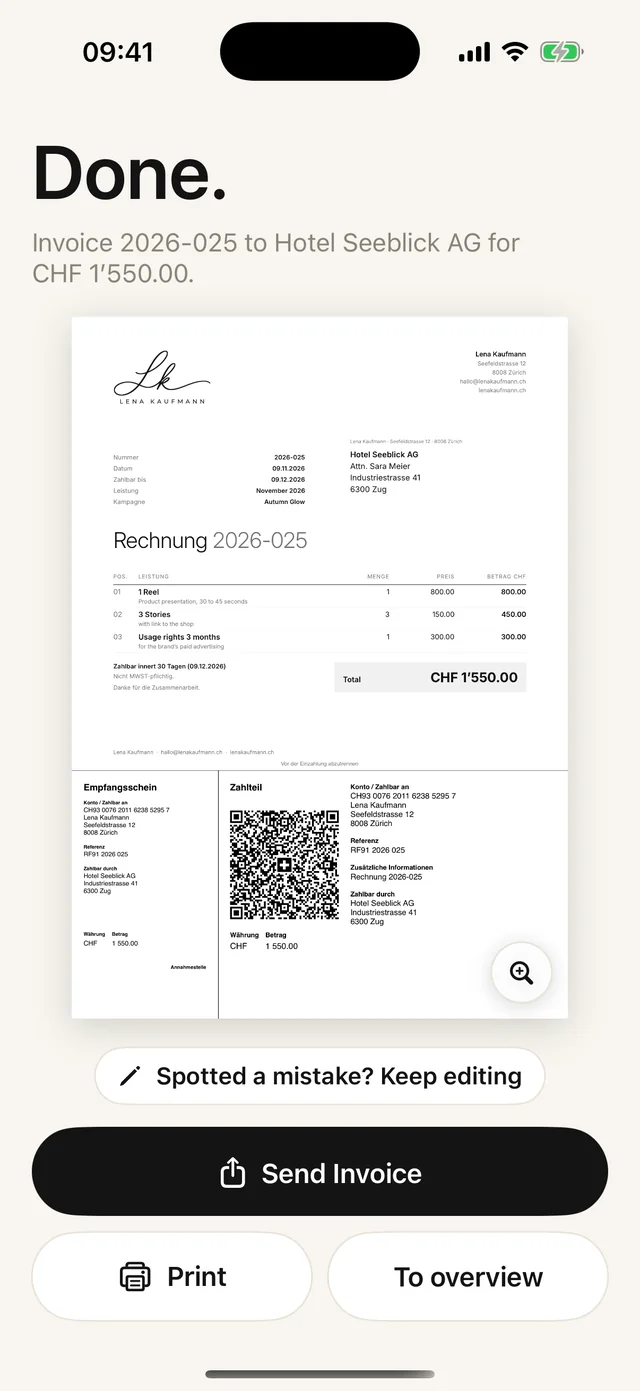
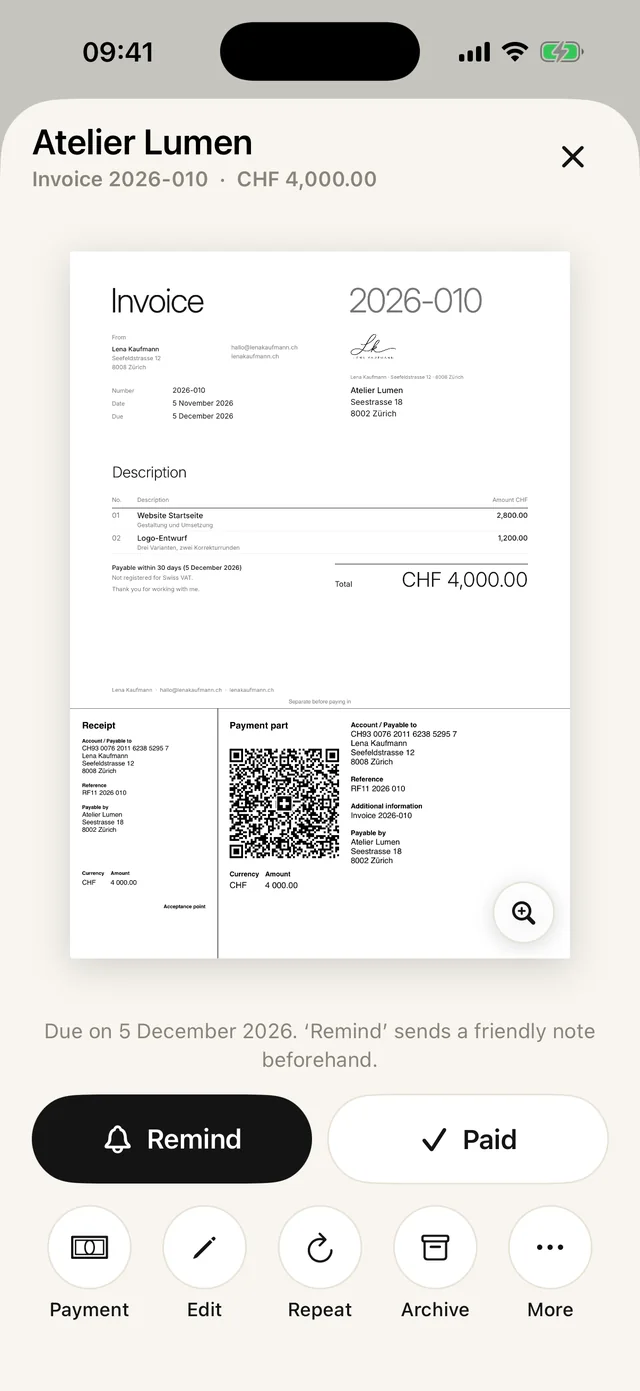
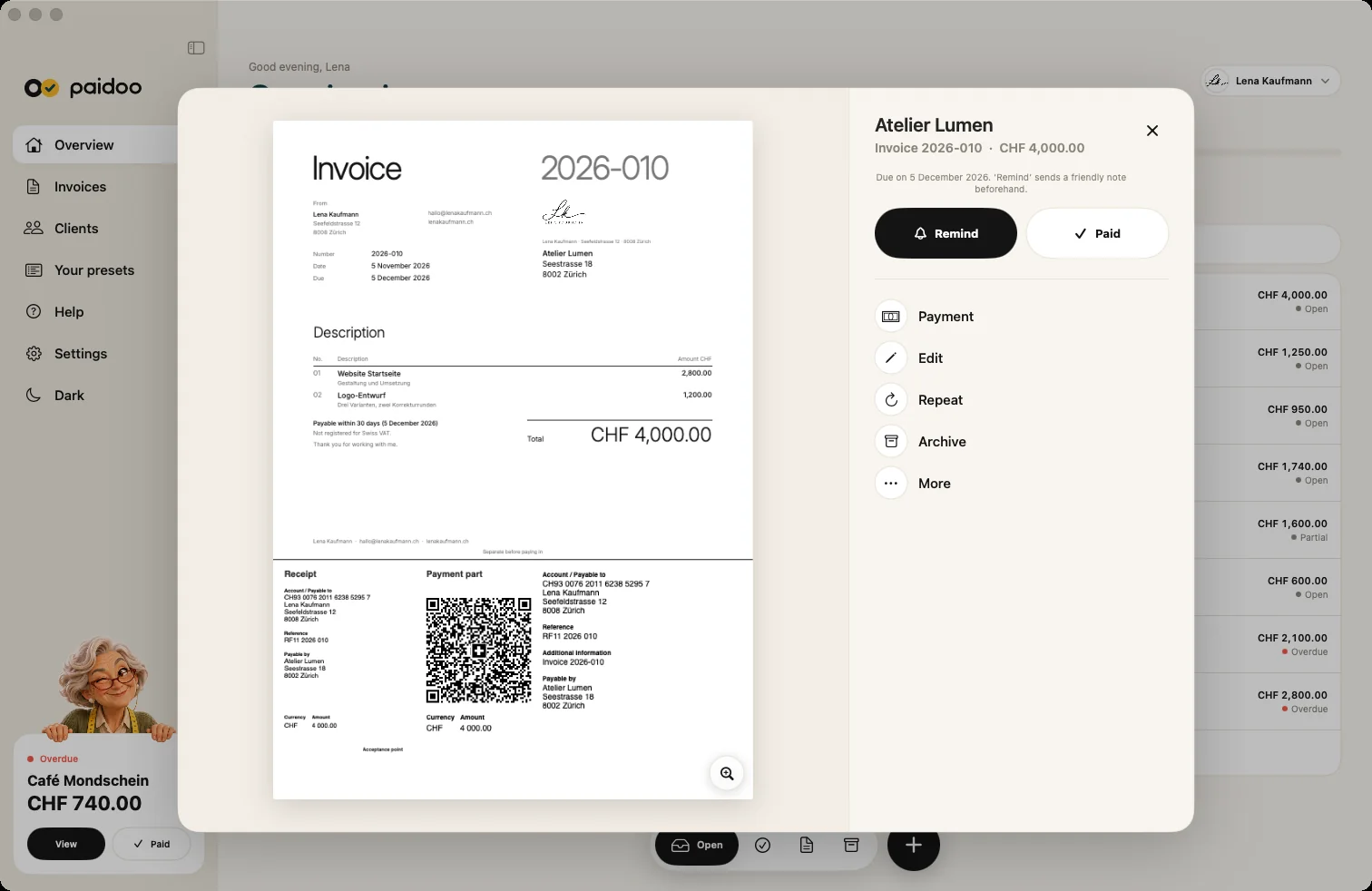
An invoice number makes every invoice unique. In Switzerland a sequential number is not explicitly required, but it is strongly recommended. In Germany and Austria it is mandatory for normal invoices. Paidoo counts up automatically, for example 2026-001, 2026-002.
iNo guarantee. We explain the basics to the best of our knowledge, as of November 2026. The information applies to Switzerland unless stated otherwise. Laws, rates and thresholds change and depend on your situation. This is not legal or tax advice. If in doubt, ask your tax office or a professional.
What makes a good invoice number
- Unique: each number exists only once.
- Sequential: the number goes up by one with every invoice.
- Without gaps as far as possible: if a number is missing, you should be able to explain why.
- Short and readable, so your customer can quote it when paying.
- Never delete and reuse a number. You cancel a wrong invoice with a credit note.

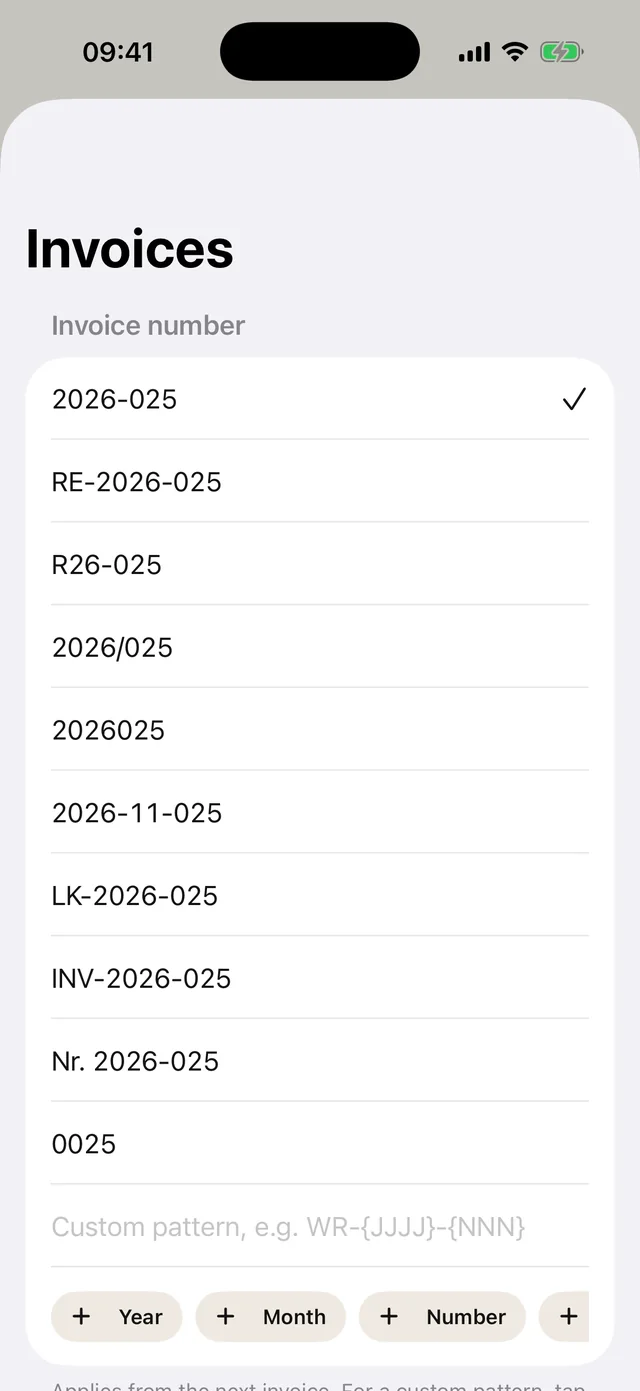
Example formats
| Format | Example | A good fit if |
|---|---|---|
| Year and number | 2026-001 | you like it simple, starting again each year |
| With a prefix | RE-2026-001 | you want to keep invoices and other documents clearly apart |
| Short year | R26-001 | the number should stay short |
| With a slash | 2026/001 | it is common in your line of work |
| Number only | 0001 | you want to count on across all years |
New year and starting over
If the year is part of the number, you can start again at 001 every year. The number stays unique because the year changes. Without the year, you simply keep counting.
You do not have to start at 1. A starting number like 101 is allowed, as long as every number stays unique. For quotes, credit notes, delivery notes and receipts it is best to use separate number ranges.
Switching to Paidoo: keep counting
If you have written invoices by hand or with another program so far, you simply continue in Paidoo where you left off.
- 01Look up your last number
For example 2026-047 on your last invoice.
- 02Rebuild the format
In the settings under "Numbers, titles, reminder fee", pick the matching format or put together your own from year, month, number and short code.
- 03Enter the next number
Under "Next number", enter 48. Paidoo shows you right away which number the next invoice will get.
- 04Check the first invoice
In the "3 · Check" step you see the number before you finish the invoice.
Check before you send
- Does the "3 · Check" step show the number you expect?
- Is the invoice date right? If the year is part of the number, Paidoo counts in the year of the invoice date.
- Changed the format? A new format applies from the next invoice. Finished invoices keep their number.
- A mistake on an invoice you sent? Do not delete it and renumber, cancel it instead.
In Paidoo
How it works, in three steps.
- 1Choose a format
In the settings for numbers and titles, pick one of ten formats or create your own with your own prefix.
- 2Set the starting number
Under next number you decide where counting continues. It cannot go lower than a number already used, so you never get a duplicate.
- 3Write
Paidoo assigns the number itself. Quotes (O-), credit notes (G-), delivery notes (L-) and receipts (Q-) are counted separately.
Questions
Frequently asked questions.
Write to us. We answer personally, usually the same day.
support@paidoo.appDoes the invoice number have to be sequential in Switzerland?
It is not explicitly required, but every invoice has to be clearly identifiable. A sequential number is the easiest way to do that and is strongly recommended.
Can I start again at 1 every year?
Yes, if the year is part of the number, for example 2027-001. That way every number stays unique. With such formats, Paidoo starts again from the beginning automatically in the new year.
Can I start at a number higher than 1?
Yes. What matters is that each number appears only once. In Paidoo you set the next number for this.
What do I do if a number is missing or used twice?
You fix a duplicate number by cancelling the invoice and writing a new one. You note a gap briefly so you can explain it later. Paidoo prevents duplicate numbers on its own.
Is the invoice number mandatory in Germany and Austria?
For normal invoices, yes. Then every invoice needs a sequential, unique number. Exceptions are small-amount invoices and, in both countries since 2025, invoices from small businesses too. A number still makes sense. Several number ranges are allowed, as long as no number is used twice.
What happens to the number if I delete an invoice?
Paidoo does not reuse it. That way it stays clear which numbers existed. If the invoice has already been sent, Paidoo suggests cancelling it instead of deleting it.
I have two businesses. How do I keep the numbers apart?
In the settings you add another business in Paidoo. Each has its own details, customers, items, numbers, design and logo.
You do the work.Paidoo does the invoice.
Invoices in a minute on the iPhone, iPad and Mac. No account, no subscription, your data stays with you. The first 5 invoices are free, Pro is a one-off CHF 29.